
Three Leadership Lessons from Mount Rushmore
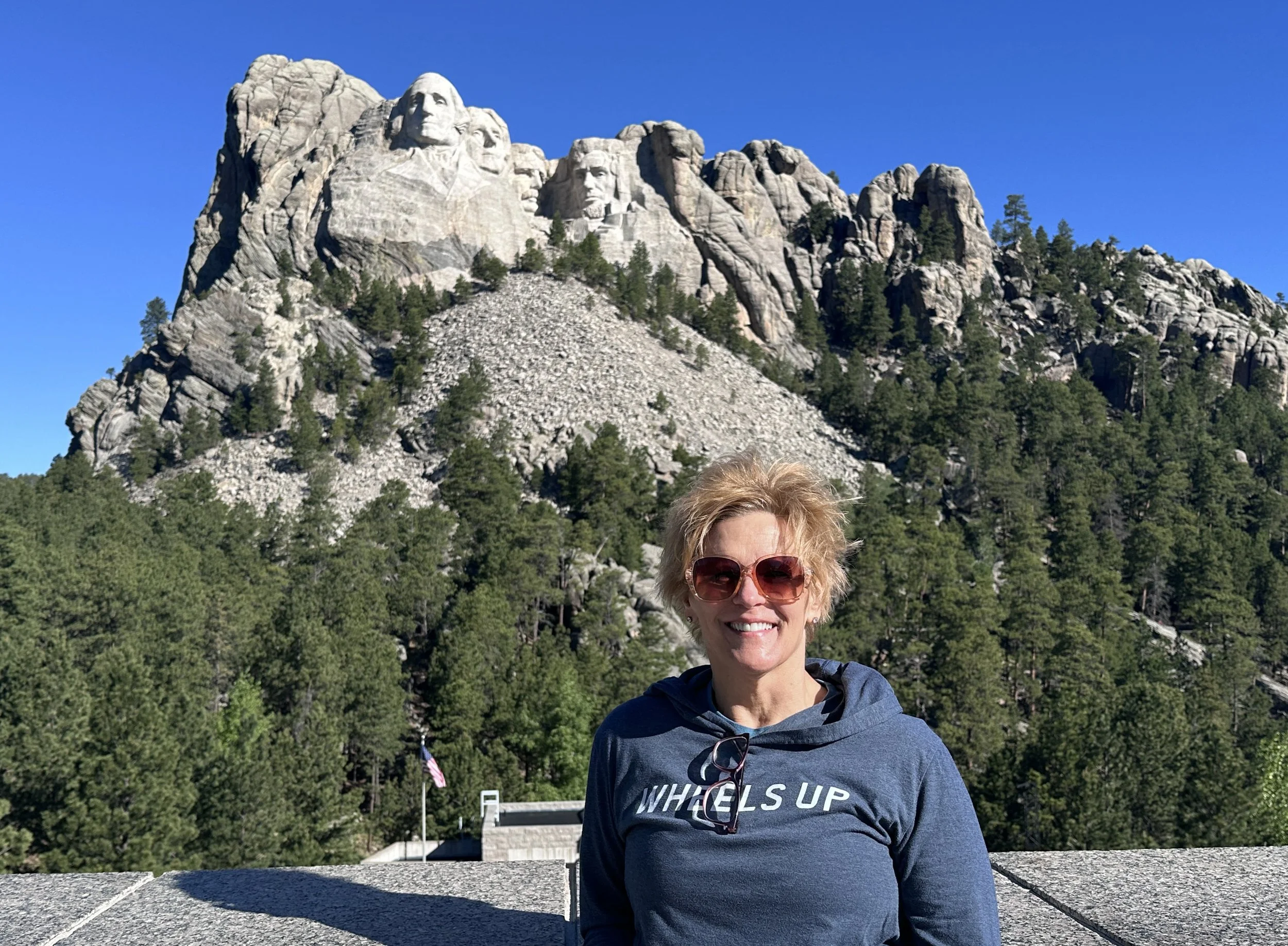
I recently traveled to South Dakota to present a workshop on Navigating the Transition to Leadership for the Independent Insurance Agents of South Dakota. Since I arrived a day early, I decided to make the drive to Mount Rushmore. It had been on my bucket list for years.
Although the monument itself is impressive, whatmakes Mount Rushmore remarkable isn’t simply what was carved into the mountain. It’s how the project was led. The story behind the monument highlights three leadership principles that remain just as relevant today as they were nearly a century ago.
First, leadership begins with vision. Before anyone drilled a hole or set a charge of dynamite, sculptor Gutzon Borglum had to see something that did not yet exist. Where others saw a granite mountain, he saw four presidential faces. Really?!? He saw faces in the mountain? I look at the photo below and see…a big rock.
That is what leaders do. They see possibilities before others can. They help people envision a future that does not yet exist and inspire others to help make it a reality.

Mount Rushmore as it appeared before carving
Second, leadership requires adaptability. Borglum originally began carving Thomas Jefferson on the left side of the monument (as you are facing it), but the granite proved unsuitable. After months of work, the partially completed carving had to be blasted away, and Jefferson was repositioned on the other side of George Washington.
Many leaders struggle when a plan doesn’t unfold exactly as expected. Effective leaders understand the difference between changing the goal and changing the path. Borglum never abandoned his vision of Mount Rushmore. He adapted the plan when circumstances demanded it and continued moving forward.
Finally, leadership is about developing others. Borglum died before the monument was completed. His son, Lincoln Borglum, had worked alongside him for years and stepped in to oversee the final stages of the project.
The best leaders do not build organizations that depend on them. They share knowledge, develop talent, and prepare others to carry the work forward. Their success is measured not only by what they accomplish, but by what continues after they are gone.
Vision. Adaptability. Legacy. Those may be the three most enduring leadership lessons carved into the side of a mountain.